

Local area and property guide
Where to Buy in Nice: A Neighbourhood Guide
Looking for an apartment or villa in Nice, but unsure whether to focus on the Port, Mont Boron, Cimiez or the city centre? Choosing a neighbourhood starts with a practical question: how would you like to live in your new home?
A pied-à-terre for a few weeks each year, a family home and a house for welcoming friends involve different compromises. Sea views, walking, schools, parking and outdoor space can each take your search in a different direction.
This guide sets out the areas to compare as you refine your buying plans, with their points of interest and the questions to consider before choosing an address.
1. What would everyday life in Nice look like for you?
Main home or second home: start with your habits
For a second home, picture your arrival and the days that follow: reaching the property, picking up groceries, going to the beach or heading out for dinner. Being able to leave the car behind may matter more than an extra bedroom.
For a main home, add work, children, activities and regular journeys. An apartment that appeals during a viewing also needs to suit a Tuesday morning in term time.
Some buyers give more weight to peace and quiet or a view. Others prefer a central address, even with more activity around them. Establishing these priorities is useful before working through a long list of properties.
A first set of areas to compare
| Your priority | Areas to consider | What will help you decide |
|---|---|---|
| Enjoying the city on foot | The Port, Carré d’Or, Musiciens; Libération depending on your routines | Your regular destinations and the actual walk from the property |
| Finding a sea view | Mont Boron, the Promenade des Anglais; waterfront properties at the Port | The view from the rooms and outdoor space, the floor and neighbouring buildings |
| Planning family life | Areas compatible with your chosen school and activities | How the journeys fit together, beyond distances on a map |
| Finding outdoor space and more room | Include properties in the hills in your comparison | Access, maintenance and the role of the car in daily life |
| Buying a character apartment in the city centre | Musiciens, Carré d’Or and other central addresses | The layout, building condition, floor and outdoor space |
These suggestions help you put together an initial shortlist. The comparison then becomes more precise at the level of the individual property and its address.
2. Which areas should you compare when buying?
The Port: enjoying Nice on foot
Around the harbour basin, the Port lends itself to life on foot: the area is at sea level, with convenient access to the centre. In our work with buyers, we often suggest it for a second home when the client wants to enjoy Nice without organising each day around a car.
Treat the view as a separate requirement. At the Port, properties away from the waterfront generally do not have a sea view. If this matters to you, check what you can actually see from the living room, bedrooms and outdoor space.
The Port can also suit a main home. Consider how the property fits your routines: useful shops, the journey to school or work, and access by car when you need it. Returning at different times of day will also help you understand the atmosphere.
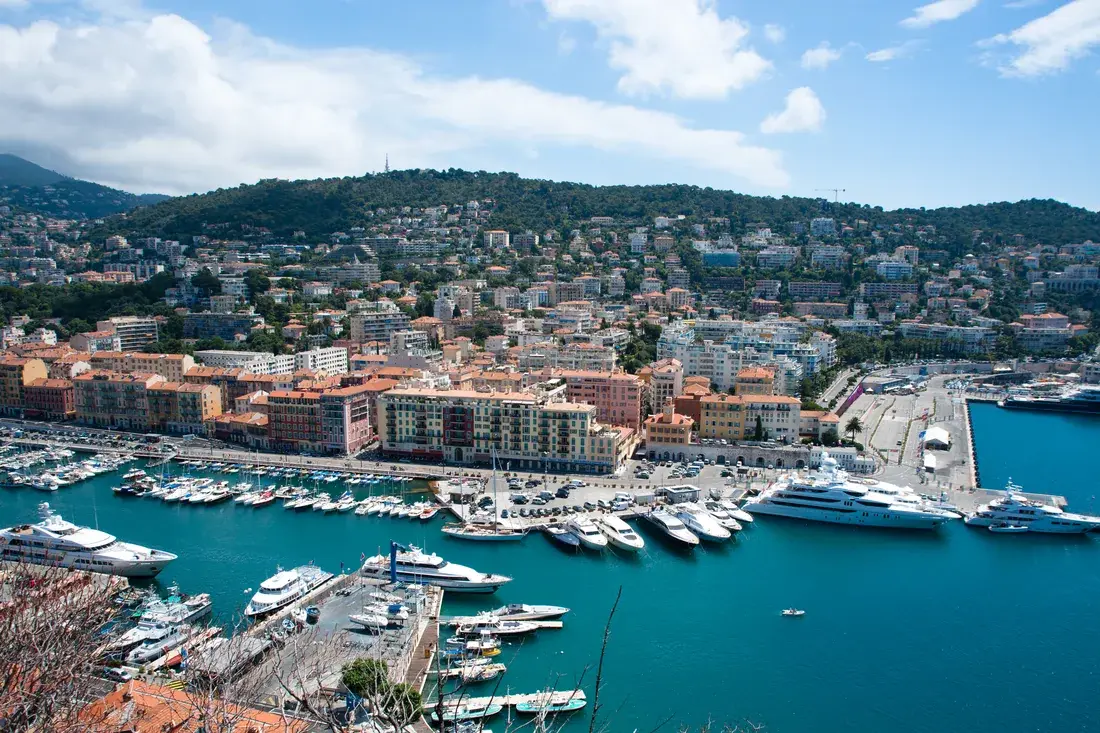
Mont Boron: putting peace and views first
Mont Boron is another option when peace and quiet and a view take priority. Its elevated position can offer outlooks you will not find at harbour level. In our advice to buyers, it is one of the areas we consider for a main home when a more secluded setting is important.
The compromise often concerns getting around: a car is generally needed for daily life. Before choosing a property, try the route to the places that will matter to you, including the return journey and parking.
A search for a second home with a view may also lead to Mont Boron. Whether the property will be your main or second home is therefore only part of the decision: consider the relative importance of views, peace and being able to walk everywhere.
Mont Alban can broaden a search in this part of Nice. It deserves separate consideration, however: observations about one address in Mont Boron do not automatically describe the access, orientation or views at another address. The City of Nice identifies these areas separately in its Nice Historique district information.

Carré d’Or: looking close to the seafront and city centre
For buyers who want to reach the sea and enjoy central shops and restaurants, the Carré d’Or is an area to consider. The actual proximity of the Promenade, pedestrian streets and your preferred destinations can help distinguish one address from another.
This search may be for a pied-à-terre or a home used all year round. Give the comfort of the property as much attention as its location: layout, natural light, bedrooms, access to the floor and outdoor space.
Property listings use the name “Carré d’Or” for boundaries that can vary. Identify the exact street and walk the route yourself. An address near the sea does not guarantee a sea view, a terrace or the peace and quiet you are looking for.
Musiciens: looking for a character apartment in town
The Musiciens neighbourhood may suit a search for a character apartment with a central lifestyle. Its architectural heritage is among the features highlighted by the Nice Côte d’Azur Tourist Office.
When selecting properties to view, consider the layout, floor, natural light and condition of the building. If a façade appeals to you, continue the comparison inside: bedroom arrangement, circulation between rooms, space to work and access to outdoor space.
Assess noise in person, in the rooms you would use. A courtyard-facing bedroom and a street-facing living room will feel different. Musiciens and the Carré d’Or may suit overlapping requirements; your journeys and the property itself will help you choose between them.
Addresses around Dubouchage can also broaden a city-centre search. Examine them separately, according to access, the immediate surroundings and the features of the property.
Cimiez: fitting the home around family routines
Cimiez is one of the areas to consider when moving to Nice year-round. Its landmarks include the gardens of the Arènes and the Monastery, featured by the tourist office.
For a family, start at the property and work through an ordinary day: school, work, shopping, activities and the journey home. The name “Cimiez” covers addresses whose access and routes need to be compared individually.
For an apartment, weigh up usable space, layout, balcony or terrace, building access and parking. If you are considering a house, add how you would use the plot and outdoor areas.
The appeal of the location lies in this combination: a suitable home, surroundings you enjoy and journeys that work with your routines.
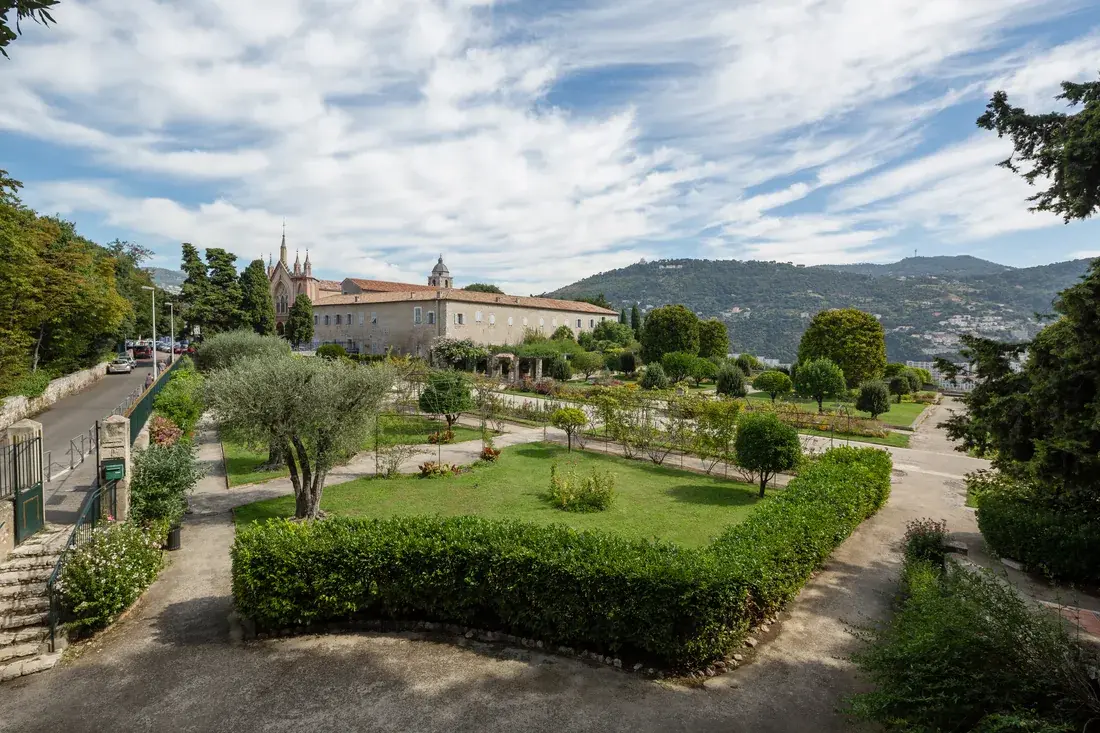
Fabron and La Lanterne: comparing lower slopes and higher ground
For families interested in the International School of Nice, Fabron and the higher areas are among the options we explore. Each property then needs to be considered alongside the family’s routines and the school they ultimately choose.
Distinguish addresses close to the coast from those further uphill. A garden, terrace or view may change a property’s appeal; access and the journey to shops or activities also matter.
For an apartment in a residential development, ask what the service charges include and how any shared facilities are managed. Compare parking, the route between the vehicle and the apartment, and how you would use the outdoor space.
An area that looks convenient on a map still needs to be tested from the property: by car, on foot and, if you plan to use it, by the public transport available nearby.
The Promenade des Anglais: assessing each seafront address
The Promenade deserves a separate search when seeing the sea and living on the waterfront are priorities. Compare it by location, building and floor.
During a viewing, spend some time in the living room and outdoors. Check the view both sitting and standing, where the sun falls, and how you would use the balcony or terrace. Listen to the surroundings with the windows open, then closed.
Also examine the bedrooms, their orientation, building access and parking. If you spend several weeks a year or live full-time in Nice, the quality of the sleeping areas and the practicalities of daily life will play an important part in your choice.
Gairaut and Rimiez: starting with the house and regular journeys
If you are looking for a house with outdoor space or a setting away from the seafront, Gairaut and Rimiez are areas to consider. They are among the neighbourhoods of the Hauts de Nice.
Describe the outdoor space you want precisely: an easy-to-use garden, room for entertaining, a pool, privacy or some living accommodation on one level. These requirements will help identify properties worth viewing.
Then test access and regular journeys. The property entrance, parking options, children’s journeys and grocery shopping may change how you assess a location.
Keep the differences between Gairaut and Rimiez in your shortlist. A recommendation should follow from the property and how you would use it, rather than simply from a preference for an address in the hills.
Libération: making room for neighbourhood life
Libération is worth considering when your search centres on urban life and local routines. Its market extends around avenue Malausséna, place de Gaulle and the Gare du Sud. See the tourist office’s market information.
When considering a purchase, walk your usual routes from the building: the shops you would use, transport, places to go out and regular destinations. This lets you compare the address with another in the city centre according to your needs.
Near a busy location, observe access, deliveries and the surroundings at different times. The layout and orientation of the apartment will help you assess the balance between activity outside and comfort at home.
Vieux-Nice: checking how the apartment works day to day
Vieux-Nice, the Old Town, may appeal to buyers drawn to a historic setting and the life of its streets. The tourist office includes it among the city’s historic landmarks.
Before choosing an apartment, examine access carefully: the floor, a lift if there is one, the stairs and what arrival would involve with luggage or groceries. Also consider light, ventilation and room layout.
Return to the street at the time you would be living there. A short stay, regular visits in different seasons and a main home involve different habits. This additional visit helps establish whether the atmosphere you enjoy also meets your need for rest.
3. How should you compare budgets across neighbourhoods?
Compare properties with similar characteristics
A neighbourhood name is not enough to assess a price. Start by comparing property types and features: apartment or villa, size, condition, floor, lift, outdoor space, parking, view and immediate surroundings.
Two apartments of the same size on one street may meet very different needs. In your shortlist, distinguish essential features from those on which you can compromise. This makes price differences easier to examine.
For a house, also consider the size and layout of the plot, access, the condition of installations and any work to be planned. Relate the asking price to the overall cost of your project.
Cross-check listings against completed sales and property documents
Listings indicate asking prices. The French tax authority’s DVF property transaction data provide information on completed sales. Using these data involves checking what was sold and which comparable details are available.
A nearby transaction is not necessarily comparable to the apartment you are viewing. A sale price and address alone do not reveal the view, interior condition or quality of an outdoor space. Cross-check the available information against the property’s features and documents.
Also allow for acquisition costs, work, setting up the home and future running costs. Our guide to buying property in France as a non-resident explains how to prepare this budget and the steps of the purchase.
4. What should you check at the address before choosing?
The journeys that will matter to you
Try your routes from the property entrance. If you want to walk, check slopes, steps, crossings and the return journey. If you plan to use a car, drive up to the building or house and assess parking.
For public transport, start with the address and your schedule. Being close to a stop does not, by itself, describe the journey to your destination.
With children, identify the schools to contact before settling on a property search area. For families we have advised, our suggestions have included Fabron and higher areas for ISN, and the Port, city centre and Mont Boron for ABC schooling.
ABC has two locations to consider according to school stage: nursery and primary classes on boulevard Carnot, and secondary classes on rue Gioffredo. Compare journeys from shortlisted properties with the whole family’s routines. Our guide to international schools and nearby areas to live can help you prepare.
Views, sunlight and comfort in each room
Check the view from the places where you would spend time: the sofa, dining table, bedrooms and outdoor space. Identify neighbouring windows or buildings and what enters your field of vision from different positions.
For light and orientation, ask when the property receives sunlight, then check this during a suitably timed viewing. In an apartment with windows on different sides, compare the feel of each side.
Listen to the surroundings in the bedrooms too. The street, courtyard, building equipment, neighbouring activities and insulation can all affect comfort. A second viewing at another time may answer questions left open by the first.
The building, outdoor space and future expenses
For an apartment, take time to understand how the building is managed: service charges, maintenance, works and shared facilities. Check access to the floor, the route to the parking space and how you would use outdoor areas.
For a house, add maintenance of the grounds, access, any pool and installations. If you are considering work, ask the relevant professionals to clarify feasibility and cost before factoring it into your decision.
These checks help you compare what two properties would require day to day and over time.
5. How can DAMA help you prepare your search in Nice?
We begin with a conversation about your budget, requirements and lifestyle. From there, we help identify a few areas to explore and prepare an initial shortlist.
Your feedback on the properties we suggest refines the search. It also helps establish what matters most to you: a view, outdoor space, a nearby school or the ability to go out without a car. We then arrange viewings of the properties you select.
If you are abroad, we can prepare videos on request, arrange video viewings and put together a shortlist. We can also group viewings over one or two days, depending on your availability and that of the properties and people involved.
The search can combine our own portfolio, properties from partner agencies and opportunities identified through our network. Our property buying support on the French Riviera explains this approach, including when you have already found a property.
You can also browse properties for sale to prepare for our conversation. To move forward, tell us which areas interest you, how you would use the home, your overall budget and the compromises you are willing to consider.
Let’s discuss your property search in Nice.
Photography credits : Alexander Migl · CC BY-SA 4.0 · cropped and converted to WebP.

Ludovic Péron · CC BY-SA 3.0 · cropped and converted to WebP.

Tangopaso · Public domain · cropped and converted to WebP.


Édouard Hue · CC BY-SA 3.0 · cropped and converted to WebP.
